Article: Hidden Cash in the Warehouse: How to Monetize Excess Inventory
Weak demand, structural cost pressure and economic uncertainty are increasing the pressure on industrial companies to improve liquidity. Yet one source of cash often remains hidden in plain sight: excess and obsolete inventory.
Especially in asset-intensive industries, spare parts, machinery and technical equipment can re-main in warehouses long after demand has disappeared. However, existing inventory data often provides insufficient insight into whether these assets are still required, what specifications they have or which sales prices could realistically be achieved. Identifying monetizable inventory and collecting the necessary technical and commercial data therefore represent key challenges.
A systematic approach combining item-level transparency, market-oriented prioritization and AI-supported data enrichment can overcome these barriers and turn dormant assets into a measura-ble working capital lever.
Why Excess Inventory deserves more Attention
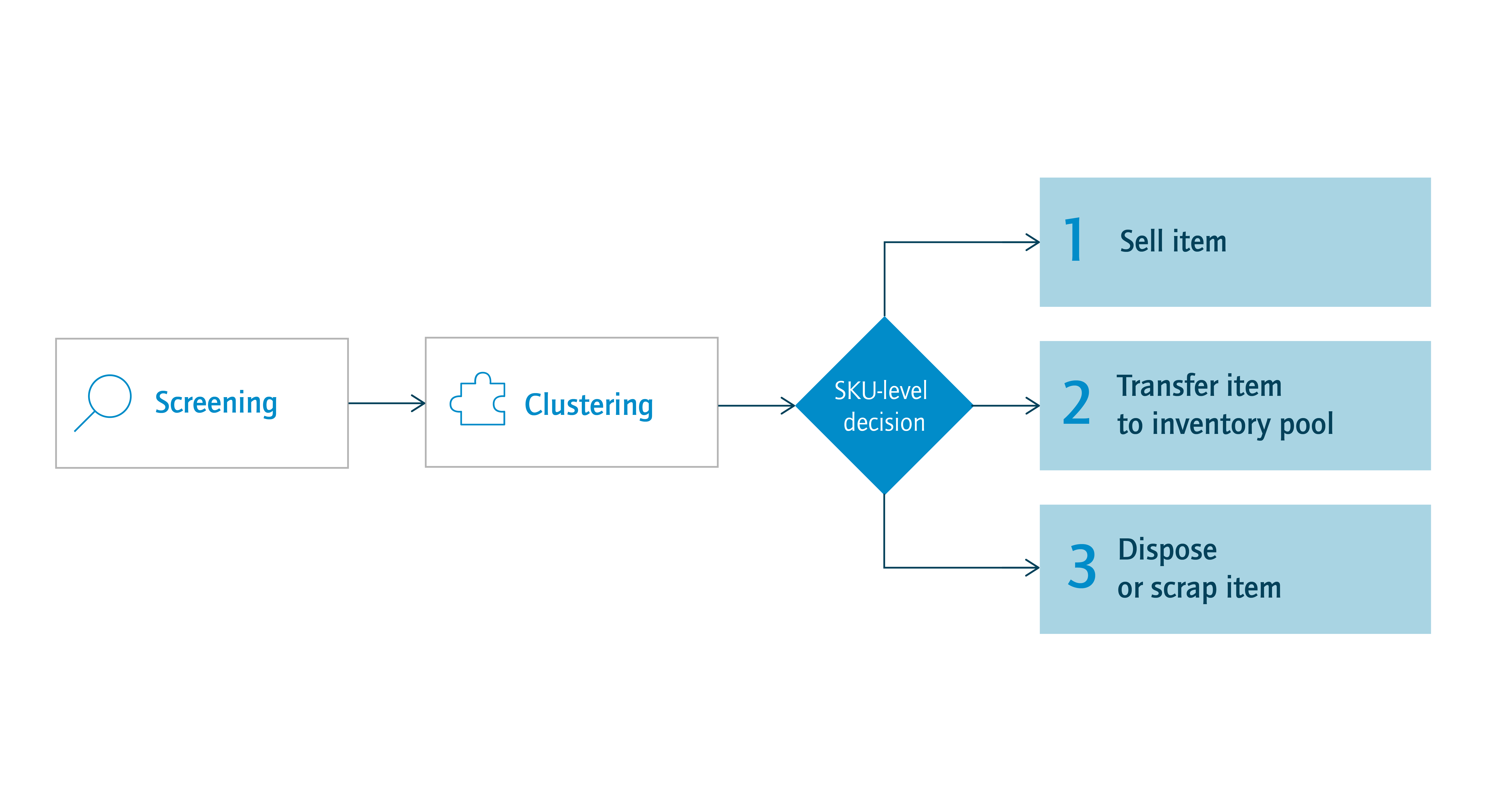
Inventory reduction should not mean cutting stock across the board. Safety stocks and critical spare parts protect operational stability. The real challenge is identifying inventory that is no longer required but still ties up capital. A fact-based screening at item level can identify obsolete materials, long-term non-movers, excess stock and materials related to closed plants or equipment without future demand. Based on this transparency, companies can determine the most economically attractive option for each item: sell, transfer or dispose.
From Inventory Transparency to Cash Potential
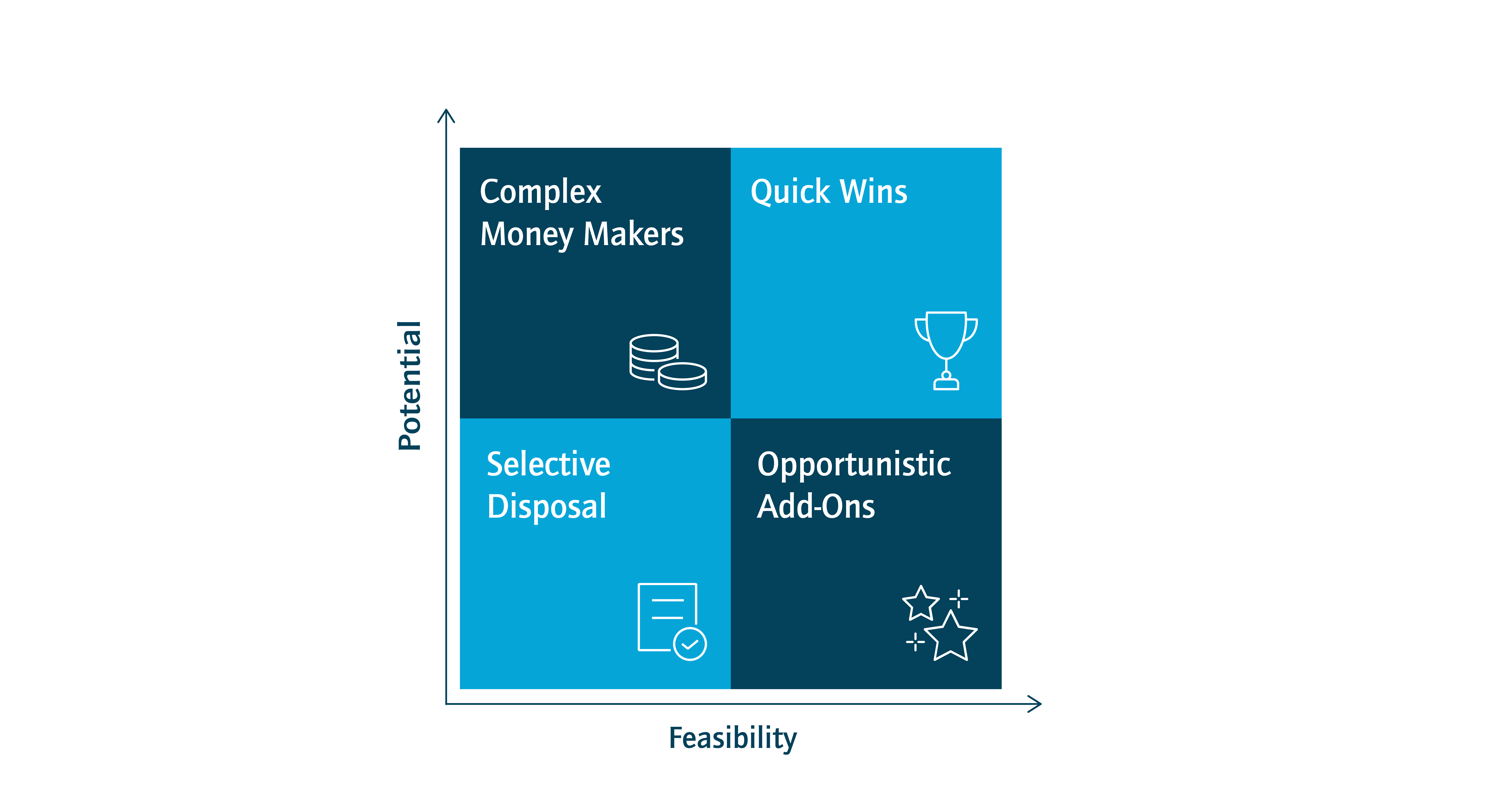
Identifying excess inventory is only the beginning. Not every obsolete item offers the same recovery potential. Companies therefore need to evaluate both the financial value of available stock and its market feasibility. Factors such as commodity group, manufacturer, condition, technical specifications and market demand determine whether an item can realistically be monetized. This enables a wave-based approach based on inventory categorization according to monetization potential and feasibility:
Instead of asking how much inventory can be eliminated, companies can focus on a more relevant question: Where can meaningful impact be achieved with manageable effort?
AI as an Enabler for Inventory Monetization
One of the biggest barriers to monetizing technical inventory is often insufficient master data. Spare parts may lack consistent descriptions, technical specifications or market price information. AI can help close these gaps. Potential applications include matching internal materials with external manufacturer catalogs, recognizing similar items, deriving specifications from images and predicting achievable sales prices based on historical transactions and buyer offers. However, a human-in-the-loop approach remains essential. While AI can enrich data and generate recommendations, experts must validate the results and make the final decisions. The objective is not simply better data, but better-informed decisions that increase the number of items that can be evaluated, marketed and ultimately sold.
From Scrap Value to Market Value
Once suitable items have been identified and enriched with relevant data, the next step is to find the right sales channel. Individual components can be offered through specialized B2B marketplaces, while larger quantities can be bundled and sold to commercial vendors. Transparent information about specifications, condition, quantity and location is essential for potential buyers to assess their value. The principle is simple: A component that has become obsolete for one company may still hold considerable value for another.
Conclusion: Excess stock Reduction needs to become Cash Generation
Excess inventory should not simply be viewed as a warehousing problem. In a challenging economic environment, it can become a relevant source of liquidity. Successful inventory monetization combines item-level transparency, value-based prioritization, intelligent data enrichment and disciplined sales execution. which requires clear responsibilities and coordination across sales, supply chain, accounting and legal, including valuation, approvals, write-downs and compliant transactions. AI can significantly strengthen this process, particularly when insufficient master data has previously prevented inventory from being marketed effectively. The objective is therefore not simply to reduce stock. It is to release cash while protecting operational stability and recovering maximum value from assets that are no longer needed.